
Business Logic Security in the Age of AI: Why Traditional Application Security Is No Longer Enough

Business Logic Security in the Age of AI: Why Traditional Application Security Is No Longer Enough
 Syedul Azam
Executive Summary
Modern applications are no longer attacked primarily through broken code. Increasingly, attackers operate through perfectly valid sessions, authenticated APIs, legitimate workflows, and normal-looking traffic.
The application works exactly as designed. The business still loses money. This is the rise of business logic abuse. Traditional application security was built to detect broken code, known exploits, and malicious payloads. But many of today’s highest-impact threats do not break systems, they abuse legitimate business workflows.
This is the rise of business logic attacks: fraud, account takeover, token abuse, session abuse, bot abuse, API abuse, entitlement bypass, and workflow manipulation that occur inside normal-looking traffic.
As organizations across the GCC accelerate digital transformation in banking, media, OTT, ecommerce, travel, and government services, this challenge becomes more urgent. AppSentinel addresses this new reality by helping organizations detect business logic abuse across APIs, users, sessions, devices, and workflows in real time.
Introduction
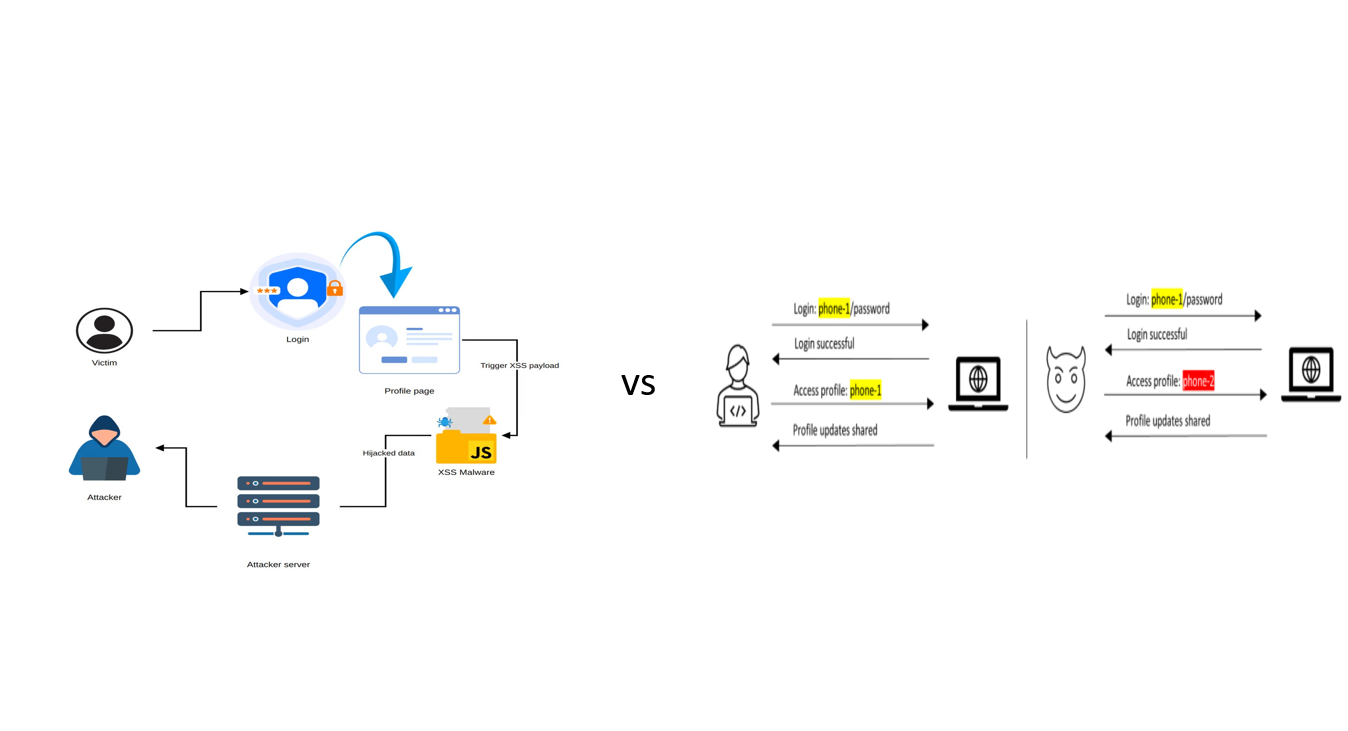
For years, cybersecurity investment focused on a familiar mission:
- Protect the perimeter
- Patch vulnerabilities
- Block malicious traffic
- Strengthen identity controls
Those priorities still matter. But attackers evolved.
Today, some of the most damaging attacks no longer rely on malware or obvious exploits. They target the rules, assumptions, and workflows that power digital businesses.
In other words, they target business logic security gaps.
Modern attackers increasingly avoid breaking systems. They prefer abusing systems that already work.
This shift is changing the security conversation. The API economy unintentionally expanded the attack surface faster than most governance models evolved. It is why business logic security is becoming one of the most important priorities for API-driven organizations.
What Is Business Logic Security?
Business logic security focuses on protecting how an application is intended to operate, not just whether its code is technically secure.
It asks questions such as:
- Is a user behaving like a legitimate customer?
- Is this API sequence normal?
- Is this refund request technically valid but operationally suspicious?
- Is this token being reused in ways that violate intended access rules?
- Is this automation legitimate or abusive?
Traditional tools often validate requests. Business logic security validates trust. Most organizations do not have visibility into business trust violations.
Why Traditional Application Security Is Not Enough
Many legacy tools were designed to stop:
- Suspicious payloads
- SQL injection
- Malware delivery
- Known signatures
- Brute-force attempts
- Vulnerable code patterns
These controls remain necessary. But they were not designed to understand intent. Security teams monitor infrastructure. Fraud teams monitor transactions. Business logic abuse lives in the gap between them.
Examples:
- A credential stuffing attempt may use real usernames and passwords.
- A fraudulent purchase may come from a valid session.
- A bot abusing a referral system may mimic normal user behavior.
- A user accessing restricted content may send perfectly structured API requests.
From the perspective of conventional tools, everything can look normal.
The traffic is legitimate. The behavior is not.
This is why many organizations appear secure on paper while still suffering fraud, abuse, and unauthorized access.
The New Attack Surface: Business Logic Abuse
Every digital platform operates on a set of invisible rules that define how users interact with it. These rules are not always visible in the UI, but they exist in the background, governing what actions are allowed, in what sequence, and under what conditions. They shape how the application behaves and ensure that business processes run smoothly.
In a banking application, these rules determine who can transfer funds, how much can be transferred, when additional verification is required, and how beneficiaries are managed. They are designed to balance usability and security, enabling seamless transactions while maintaining control over financial risk.
In ecommerce platforms, business rules control how discounts, coupons, refunds, and loyalty programs function. They define eligibility, limits, stacking behavior, and return policies. These mechanisms are essential for customer acquisition and retention, but they also introduce complexity that can be exploited if not carefully monitored.
OTT platforms rely heavily on rules around subscriptions and access control. They manage who can view content, from which region, on how many devices, and how many sessions can run simultaneously. These controls are critical for licensing agreements and revenue protection.
While these rules enable the business to operate, they also create potential exposure. Attackers do not need to break the system, they only need to understand these rules well enough to find gaps, edge cases, or unintended combinations that allow them to extract value in ways the business did not anticipate. AI lowers the skill barrier for discovering workflow abuse.
Common Business Logic Attacks
Repeated coupon redemption abuse – Attackers create multiple accounts or reuse identities to repeatedly apply first-time or limited-use coupons beyond intended limits.
Refund workflow manipulation – Users exploit return policies by falsely claiming non-delivery, returning altered items, or triggering refunds while retaining goods.
Account takeover using valid credentials – Leaked or reused passwords are used to log in legitimately, allowing attackers to operate inside real user accounts.
Token replay attacks – Stolen authentication tokens are reused to access systems without needing to re-authenticate.
Session abuse across multiple devices – A single user session is shared or hijacked across different devices or locations simultaneously.
Subscription sharing abuse – Paid accounts are shared across multiple users or resold, bypassing intended usage limits.
Fake account creation for promotions – Automated scripts generate large numbers of accounts to repeatedly claim signup bonuses or referral rewards.
API scraping of catalog or pricing data – Bots systematically extract product, pricing, or content data through APIs for competitive or resale advantage.
AI agents abusing valid workflows at scale – Automated AI-driven systems execute complex user journeys repeatedly to exploit business logic gaps.
Bot abuse that imitates real users – Advanced bots mimic human behavior such as browsing, delays, and clicks to avoid detection while performing abuse.
Why This Matters for GCC Digital Businesses
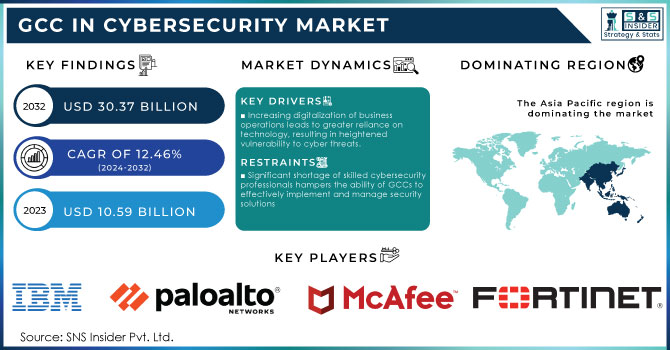
Across the GCC, digital-first services are growing rapidly in various industries
In banking and fintech, the biggest risks come from account takeover, mule account activity, and manipulation of transaction workflows. Because systems prioritize seamless user experience, attackers exploit valid credentials, session reuse, and transfer logic to move funds without triggering traditional alerts.
In ecommerce platforms, risks are centered around revenue leakage through coupon abuse, refund manipulation, fake account creation, and bot-driven inventory hoarding. Promotional systems and fast checkout flows, while essential for growth, often become targets for automated abuse at scale.
For travel and loyalty platforms, attackers focus on exploiting reward systems, promo codes, and booking workflows. This includes loyalty point theft, automated booking bots, and pricing manipulation, all of which can distort availability and lead to financial losses.
In government digital services, risks involve identity misuse, unauthorized access to sensitive citizen data, and abuse of service workflows. Since these platforms are designed for accessibility and scale, attackers may exploit weak identity verification or automate service requests.
- Within telecom super-apps, which combine payments, messaging, and services, the risk expands to session hijacking, SIM-related fraud, and abuse of integrated services. The interconnected nature of these platforms increases the blast radius of a single compromised account.
- For media and OTT streaming platforms, the primary risks include subscription sharing, entitlement bypass, geo-restriction circumvention, and token misuse. These attacks don’t break the system, they exploit how access rules are enforced.
- Across all these sectors, the common risk is not just external attacks, but abuse of legitimate systems through APIs, sessions, and workflows. As platforms become more interconnected and automated, attackers increasingly operate within normal-looking traffic, making detection more complex and the potential impact significantly higher.
These organizations depend heavily on APIs, mobile apps, identity systems, and automated workflows.
That creates opportunity, but also risk.
Complexity Has Become the Attacker’s Advantage
Modern ecosystems are assembled from many components:
- Identity providers
- API gateways
- Cloud platforms
- Payment processors
- Mobile apps
- Analytics tools
- CDNs
- Third-party partners
Each component may work well independently.
But attackers do not target components. They target the gaps between them.
The more distributed the platform, the more valuable inconsistency becomes.
This is where token abuse, stale app traffic, device spoofing, and workflow manipulation often emerge.
Why AI Changes the Threat Landscape
AI will accelerate both sides of cybersecurity.
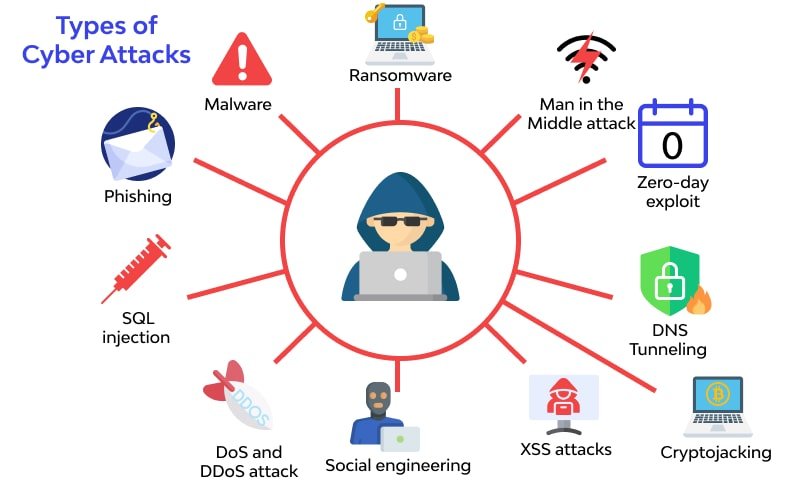
Attackers Can Use AI To:
- Simulate legitimate users by mimicking normal browsing, login, and transaction behavior to avoid detection.
- Rotate identities at scale using automated creation and switching of accounts, devices, IPs, and personas.
- Automate fraud campaigns by running phishing, promo abuse, account takeover, or refund scams continuously.
- Discover workflow weaknesses faster by testing business processes and identifying exploitable logic gaps rapidly.
- Abuse APIs more efficiently through intelligent automation of requests, scraping, and multi-step attack flows.
- Create human-like bot traffic that imitates real user patterns such as clicks, delays, navigation, and session activity.
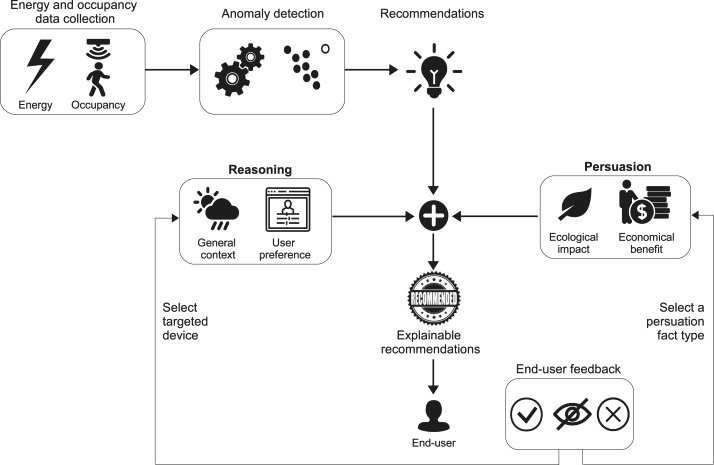
Defenders Must Use AI To:
A single request rarely tells the full story. Behavior does.
This is why AI application security is becoming essential.
How to Detect Business Logic Attacks
Business logic attacks are contextual. Detection requires more than signatures.
Security teams need visibility into:
- User behavior over time – Tracks how a user typically interacts with the system to identify unusual or risky deviations.
- API request chains – Analyzes sequences of API calls to detect abnormal or manipulated workflows.
- Session anomalies – Identifies suspicious session behavior such as hijacking, replay, or unusual concurrency.
- Device fingerprints – Monitors device characteristics to detect changes, spoofing, or multi-device misuse.
- Historical baselines – Compares current activity against past normal behavior to spot anomalies.
- Cross-channel correlations – Connects activity across web, mobile, APIs, and backend systems for a unified view.
- Workflow deviations – Detects when users bypass or alter expected multi-step business processes.
- Entitlement inconsistencies – Identifies mismatches between user permissions and accessed features or data.
Example:
One login may appear harmless.
But the same login followed by token reuse, rapid entitlement checks, region switching, and unusual session concurrency tells a very different story.
Where AppSentinel Fits
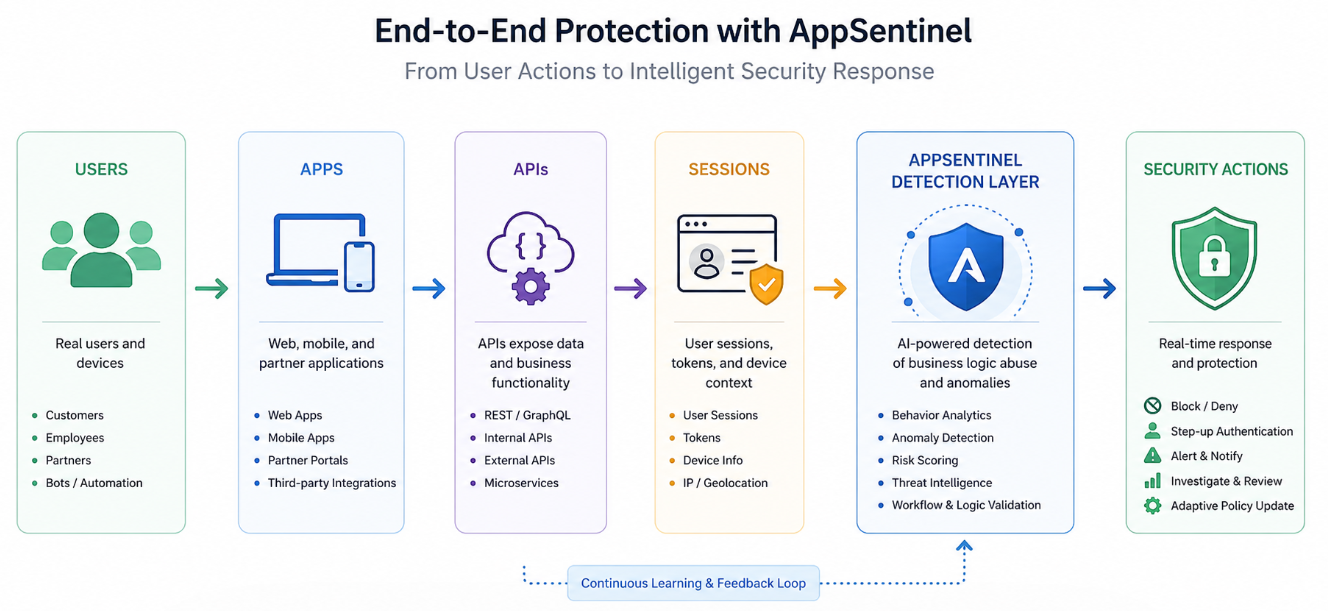
Modern application ecosystems are no longer secured by simply blocking malicious traffic. Most attacks today do not rely on breaking systems, they rely on abusing legitimate functionality in unintended ways.
This is especially visible across industries like banking, ecommerce, OTT, and travel, where attackers operate entirely within valid authentication flows, sessions, and APIs, making traditional security tools ineffective.
This is the exact problem space that AppSentinels (APPSENTINELS PRIVATE LIMITED, Bengaluru) was built to solve. The platform focuses on business logic security, analyzing how applications are supposed to behave across APIs, sessions, users, devices, workflows, and identity events, rather than just detecting known threats.
The Unifying Pattern: Valid Traffic, Invalid Intent
Across all industries, one theme remains consistent:
The traffic is technically valid, but the intent is malicious.
This is the fundamental gap in traditional security tools. Firewalls, WAFs, and rule-based systems are designed to detect malicious payloads—not to understand whether a legitimate session is being abused.
How does AppSentinels Focus on Business Logic Security
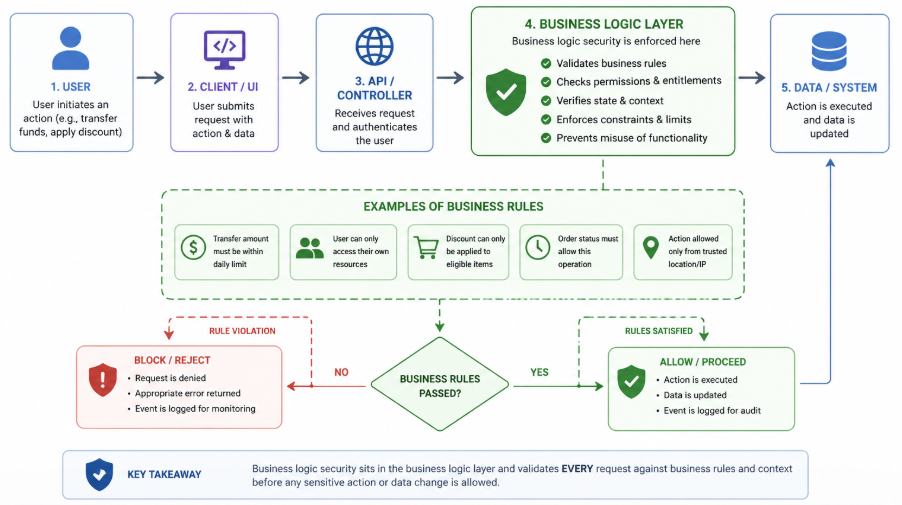
This is precisely the gap addressed by AppSentinels, a business logic security platform for API-driven and cloud-native applications.
Instead of relying only on signatures or static rules, AppSentinels builds a precision business logic graph that maps how users, sessions, APIs, and workflows are supposed to behave. It continuously analyzes real-time interactions across:
- APIs
- Sessions
- Users
- Devices
- Identity events
- Multi-step workflows
This enables detection of attacks that appear completely legitimate at the request level but violate expected behavior patterns.
Examples include:
- Low-and-slow credential stuffing across sessions
- Token replay and session abuse across devices
- Workflow bypass fraud inside multi-step flows
- Geo-rights circumvention using valid authentication
- Automated abuse that mimics human behavior
Example Use Cases
Detecting Mule Account Fund Routing Patterns Across APIs – In banking transaction ecosystems, AppSentinels identifies coordinated mule account behavior where multiple accounts are used in a structured flow to move funds across endpoints in a way that individually appears valid but collectively forms a laundering pattern. By mapping session-to-session relationships and tracking transaction workflows across APIs, it detects chained transfers and abnormal money movement graphs that traditional rule-based systems miss because each transaction is technically authorized.
Blocking Inventory Hoarding Bots During Flash Sales – During limited-stock product drops, AppSentinels identifies automated bots that behave like real users by mimicking browsing patterns, adding items to carts, and completing checkout flows within milliseconds. By analyzing workflow speed, session consistency, and API interaction sequences, it detects abnormal purchasing velocity and coordinated multi-account behavior designed to monopolize inventory and resell goods in secondary markets.
Preventing Geo-Restriction Bypass Using VPN-Based Access – OTT providers use AppSentinels to detect when users are accessing content libraries through VPNs or proxy networks to bypass regional licensing restrictions. Instead of simply blocking IPs, the system analyzes session consistency, login geography shifts, and behavioral anomalies across API calls to determine when content access violates licensing rules even if authentication is valid.
Detecting Miles Abuse and Loyalty Fraud Chains – In airline loyalty ecosystems, AppSentinels identifies abnormal mileage accumulation patterns where multiple accounts or stolen credentials are used to artificially generate points and redeem them for travel rewards. By building a behavioral graph across booking APIs, redemption flows, and account interactions, it detects coordinated abuse patterns that traditional fraud systems treating each booking independently would not catch, enabling early identification of loyalty fraud, account takeovers, scripted abuse, and reward laundering activities before large-scale financial loss occurs.
By combining multiple signals, AppSentinel helps close the gap between technical validity and business trust.
Why Business Logic Abuse Is Different from Classic Vulnerabilities
Classic vulnerabilities usually involve broken software.
Examples:
injection flaws occur when an application does not properly validate or sanitize user input, allowing attackers to inject malicious commands into a database or backend system. A simple search field or login form can become a gateway to extract or manipulate sensitive data if input handling is weak.
Misconfigurations happen when systems are deployed with insecure default settings or overly broad permissions. This could mean cloud storage buckets that are accidentally public, admin panels exposed without proper access controls, or APIs that allow unrestricted data access due to missing authorization checks.
Exposed services refer to internal tools or infrastructure components being unintentionally accessible from the public internet. This might include debugging endpoints, internal dashboards, or development APIs that were never meant to be exposed externally but become attack entry points when left unprotected.
- Unpatched systems involve known vulnerabilities in software or frameworks that have already been publicly disclosed but not yet fixed. Attackers often exploit these gaps using automated tools, since the exploit methods are widely available and well documented.
Business logic abuse is fundamentally different from all of these scenarios.
In these cases, the application is not broken at all, it is working exactly as designed. Authentication succeeds, APIs respond correctly, and workflows execute without errors. The issue is not technical failure, but intent misuse of valid functionality.
What Businesses Should Do Next
1) Map critical business flows
Identify the workflows that directly impact revenue, customer trust, and user experience, such as login, checkout, payments, refunds, subscriptions, and loyalty redemption.
2) Secure APIs beyond authentication
Strong authentication is essential, but valid tokens do not always mean valid intent. Monitor how authenticated users interact with APIs and workflows.
3) Monitor sessions and tokens continuously
Track active sessions for signs of token replay, account sharing, impossible travel, device switching, and suspicious concurrent activity.
4) Detect abuse in real time
Use behavioral analytics and AI-driven detection to identify abnormal patterns as they happen, before they result in fraud or service abuse.
5) Prioritize high-risk user journeys
Apply stronger controls to areas most commonly targeted by attackers, including login, checkout, transfers, refunds, subscriptions, and entitlement checks.
6) Treat business logic as an attack surface
If a workflow is important to the business, it is valuable to attackers. Protect business processes with the same focus given to infrastructure and code.
Final Thought
For the past decade, security teams focused on protecting systems from external threats. The next decade will be about protecting systems from internal misuse of legitimate functionality. That is a harder challenge, but also a more important one. Because in modern cybersecurity, the question is no longer only whether a request should be allowed. It is whether the business can trust what happens next.